What if scaling smelting and refining capacity for critical minerals wasn’t about the size of the plant, but the quantity of plants?
The Current State of Affairs; Simplified
The point of this article is not to belabor the current state of the critical mineral discussion or market. A myriad of sources and commentary exist on this topic already.
A few points should be established however:
- Definitions of critical minerals vary by jurisdiction. This article paints with a general broad brush to develop a conceptual approach across mineral entities, not establish specific technical methodologies.
- China currently dominates critical mineral mining and processing capacity, with well over 70% market share in both categories, regardless of mineral definition.
- Global mineral refining capacity (including China’s) is built on the traditional smelting/refining economies of scale, which emphasize large throughput to drive down costs per tonne.
Last week, the US Army unveiled it’s mobile, modular refining fleet development project; a partnership with the Idaho National Laboratory, Perpetua Resources, and Westpro Equipment. This week, all eyes are on South Korea Zinc’s deal to refurbish a former zinc refinery site in Clarksville, TN. These recent developments offer a primer to a larger question around the current mineral refining capacity conversation.

This article proposes an alternative model of scale; one based on quantity of small refineries rather than quantity of tonnes handled by a limited number of large refineries
The Current Model & its Risks
Currently, throughput and cost per tonne are the primary metrics by which the mineral industry scales operations. These economies of scale require massive feed quantities to justify the Capital and Operation Expenditures (capex, opex) of these massive refining facilities, whose capex can exceed billions of dollars. Meanwhile, regular upgrades and rebuild sustaining capex can exceed $200 million every two to three years.
This model and reliance on material throughput quantities has left these large systems frail and vulnerable to considerable market and supply risk. And in a mineral market where individual geopolitical players exhibit increased pricing power, the entire system is at risk. This is evidenced by the recent news of Glencore’s desire to (allegedly) close the Horne smelter due to high costs and overcapacity. Throughout 2025, global copper smelting overcapacity outpaced mining supply, causing treatment and refining charges to plummet. In some cases, Chinese smelters accepted negative treatment and refining charges to keep smelters fed. This all begs the question, could this scenario be mitigated by smaller, mobile modular facilities that could adjust capacity to meet supply?
Large smelting and refining facilities also carry significant staffing and environmental impact risks. Many of these large facilities are relics of a bygone era, with bolted on upgrades and rebuilds over time to attempt to bring them into compliance. These attempts are not always successful, and the combination of increasing environmental standards and degrading facilities can often shut down facilities. Both staffing and environmental risks played a part in the Hayden Smelter shutdown for example.
Risk Reduction, Flexibility, & Scalability. Can we have it all?
Probably not. But we can start the conversation. Rather than focusing smelting and refining capacity building efforts through massive throughput scale, an argument can be made for development of a small-scale approach. Reducing plant size, creating modularity, and mobilizing the refining capacity can help derisk, provide flexibility, and scale the approach.
Plant Size
Reduced size means reduced risk. Reduced capex risk, reduced permitting risk, reduced environmental impact. Reducing the size does require giving up throughput, tonnes, and maybe some zeros on the bottom line, but the trade off can be substantial, especially when considering project schedules.
The recently proposed Korea Zinc Clarksville plant expects to begin construction in 2027, with first production in 2029.
With a $7.4 billion price tag that hasn’t been fully raised, and large scale capital projects being what they are, the three year timeline seems hasty at best, and impossible at worst. Still, even if the project schedule were maintained, first production in 2029 exposes the project to massive commodity market risk. The plant is reportedly designed to produce and refine 13 critical minerals, with the following annual production targets:
- 300,000 tonnes of zinc,
- 35,000 tonnes of copper,
- 200,000 tonnes of lead and
- 5,100 tonnes of rare earths.
If the facility aims to produce 5,100 tonnes of 10 different critical minerals, could that capital and commodity market risk be better addressed through a different project? This risk still exists in a scenario where modular or mobile approaches are pursued, but it is shared across many small facilities, reducing the per unit capex and commodity market risks.
Modularity
The current mineral refining and smelting model requires massive, multi-million dollar and multi-month long shutdown cycles to maintain and upgrade key pieces of equipment in the plant. For example, Rio Tinto’s Kennecott smelter in Utah regularly shuts down for 24 planned days every two years. The sustaining capex of these activities often exceeds $100 million dollars for each shutdown.
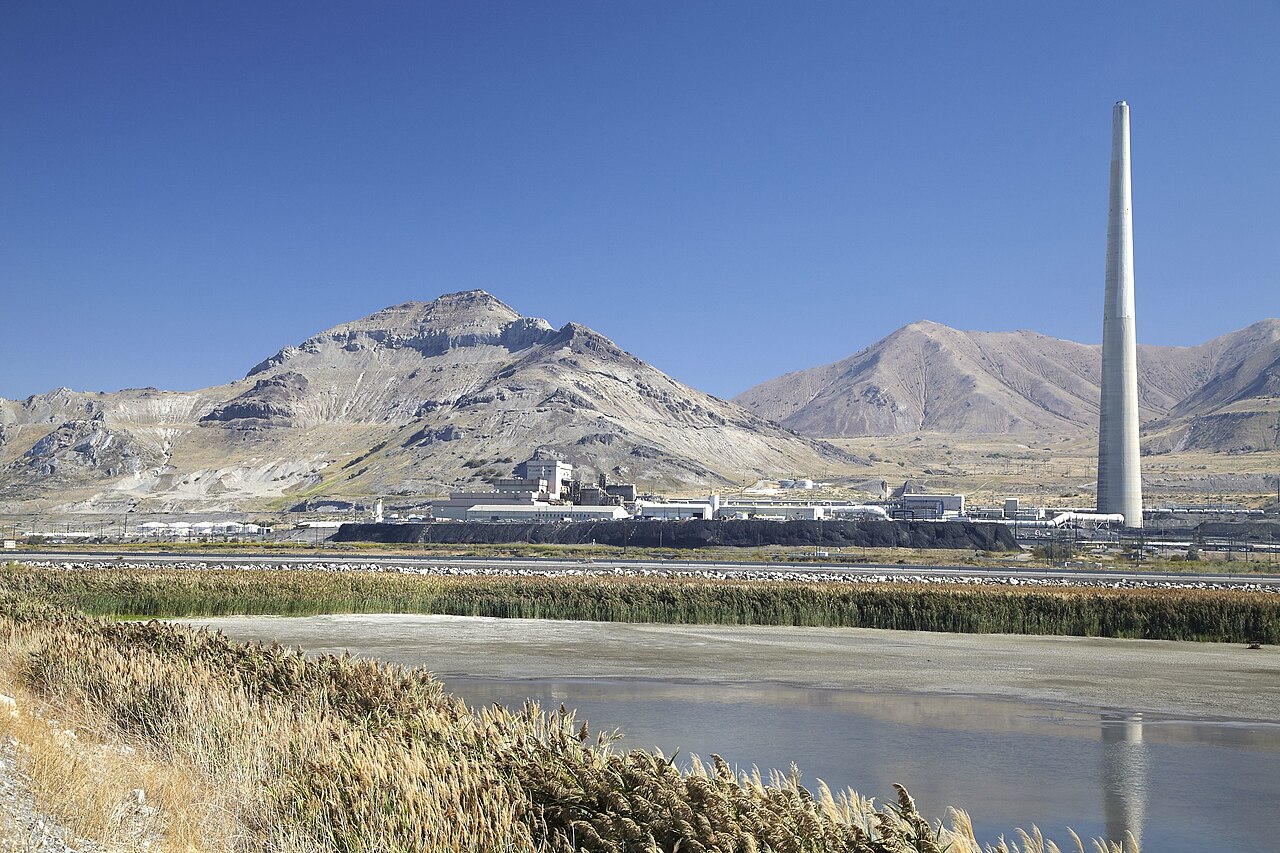
An opportunity exists to drastically reduce the supply chain’s reliance on these cycles by not only reducing plant size and increasing quantity, but by introducing modularity to key, non-specialized or non-metallurgically specific equipment. Pumps, tanks, centrifuges, and other non-specialized equipment could undergo refurbishment and be reused for multiple commodities. Incorporating designs to maximize modularity and replacement could reduce cost and downtime. Under this same logic, the modular approach provide s feed flexibility. Picture a mobile plant providing refining services for germanium for 18 months at a mine site, goes through a three month refurbish, and then hits the road again with swapped out components for refining gallium on a 24 month contract. This modularity could also provide the opportunity for assembly-line style mass production of these mobile facilities, driving down costs, creating jobs, and fulfilling the desire to rebuild a western industrial base.
Mobility
Finally, mobility means this network can flex and grow to meet mineral demand. Moving from one mine site to the next to drawdown stockpiles allows the refining network to recapitalize equipment for multiple projects. It also provides capacity for remote, low grade deposits, which could further unlock challenging projects like tailings reprocessing. Permitting flexibility is realized through smaller size and modularity, but is most obvious as a function of the mobility of this proposed model. These lower impact sites would require less permanent infrastructure, reducing reclamation and rehabilitation design requirements.
Implementation
This isn’t to say that we should implement this model into major commodity markets like copper tomorrow.
But let’s test the concept. Find the minerals whose total call is small enough to actually feel the impact of this type of approach. The total call for refined gallium for example is approximately 700 tonnes annually. A small, commodity-focused mobile modular plant could prove out the concept for a critical mineral like gallium, without a $7.4 billion dollar price tag and the multiple commodity market risk to boot. Starting with hydrometallurgical refining processes like ion exchange can offer lower capex, smaller footprints, and easier permitting.
If we can understand and modularize these processes, then we can start applying the concept and technology to other more complex minerals and refining processes. Bringing refining capacity to mineral supply where it is can help reduce the capital burden on these systems, and make them more robust in the long term.
Stated plainly, the system currently relies on a limited number of huge, fragile, and expensive chain links to deliver fixed and vulnerable refining capacity. The proposed model creates a greater number of smaller, more flexible links in the chain to reduce reliance on these huge, fragile, and expensive facilities. The US military understands this. It’s time we as an industry start leading innovation again.
 Finding Outskirts
Leave a comment