FIND YOUR FAVORITE WAY TO LEARN
I used to be skeptical of anyone who claimed, “I love learning.” It always sounded a bit performative, especially in the context of formal learning or acquiring new skills. This raw learning often involves multiple small failures, a process I personally despise.
However, I’ve often found that I can shorten the failure period of learning by applying myself physically through athletics (save golf, but that’s another set of posts altogether). I’ve slowly begun to realize that athletics and physical endeavors are my favorite way to learn. Likely because I’ve found that maximum effort is most efficiently rewarded with results. It’s satisfying and motivating.
Early on, traditional high school athletics like football taught me leadership, teamwork, and surprisingly, a bit about turn-based strategy. More recently however, my lifelong learning through athletics has shifted toward lifelong sport. One of my favorites since moving to the Rocky Mountains has become skiing. I’ve begun to develop an axiom for learning through this process; find your favorite way to learn. Then, use it to master not just specific skills but the art of learning itself.
THE PROGRESSION OF SKIING (AND LEARNING)
Skiing is a sport of progression and adaptation. For me, it started with snowboarding, evolved into alpine skiing, and eventually expanded into cross-country and backcountry skiing. Each transition has taught me something new—not just about the sport, but about myself and how I approach challenges.
Growing up in Chicagoland, snowboarding was a hobby and a way to pass the dreary winter months waiting for my next “primary sport”. I considered myself decent at the time, but the golf courses and river valleys of the Midwest will only take you so far. Still, it acted as a small window into an eventual love of winter sports. But snowboarding did teach me patience. Not just in learning a difficult challenge, but also in waiting out the winter and daydreaming about the next baseball or football season.
Nearly a decade later and with minimal snowboarding in between, I found myself moving to the Rocky Mountains and had a friend recommend the switch to skiing. It seemed like a nice way to begin a new chapter, and I found it intuitive with my snowboarding background. Shifting to alpine skiing of course came with the small failures of learning. The yard sales, deep fights with snow, and overcoming equipment are all part of the process. But slowly learning to identify great fall lines, get an eye for angles, and scout routes on Google Earth and in the field have been fulfilling processes. Many of these field skills were complemented by and still complement my career as a geologist. Alpine skiing’s primary lesson has become clear over the years: don’t just endure winter, enjoy it. That mindset shift was critical: the purpose isn’t to excel in a sport, but to make the most of the season.
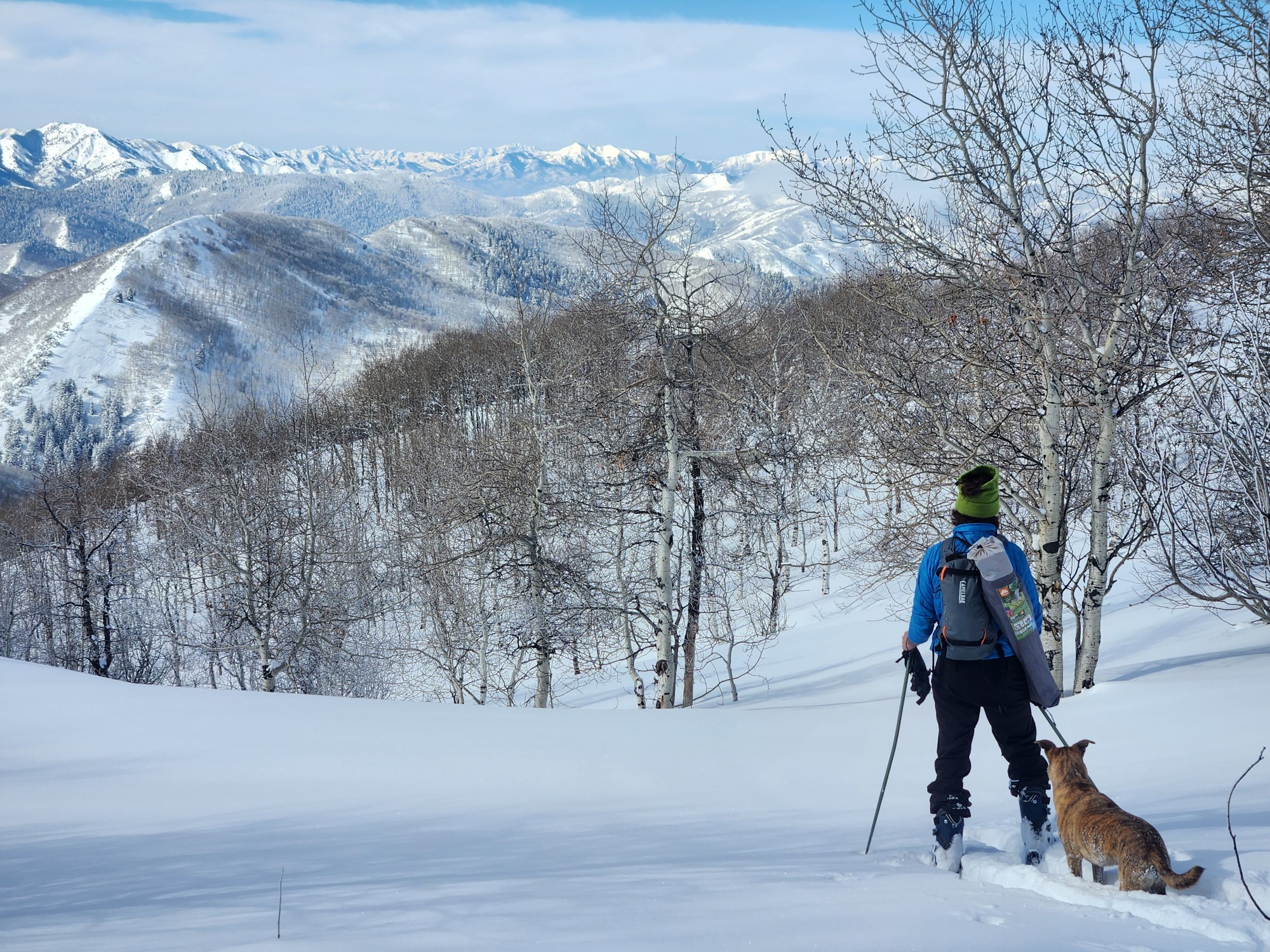
Over time, exploration and exercise have taken center-stage in making the most of the season. Over the past several years, my enthusiasm for the sport and love of winter have fueled my research into transitioning to backcountry and cross country skiing. New equipment, new risks, and new challenges all demand preparation and careful planning. And being deep into a topic I loved learning about, framed in a way I like to learn has made the process seamless and enjoyable. It also doesn’t hurt that we moved up to a new home at 8,000 ft last season, providing unparalleled access to these new styles right outside my door.
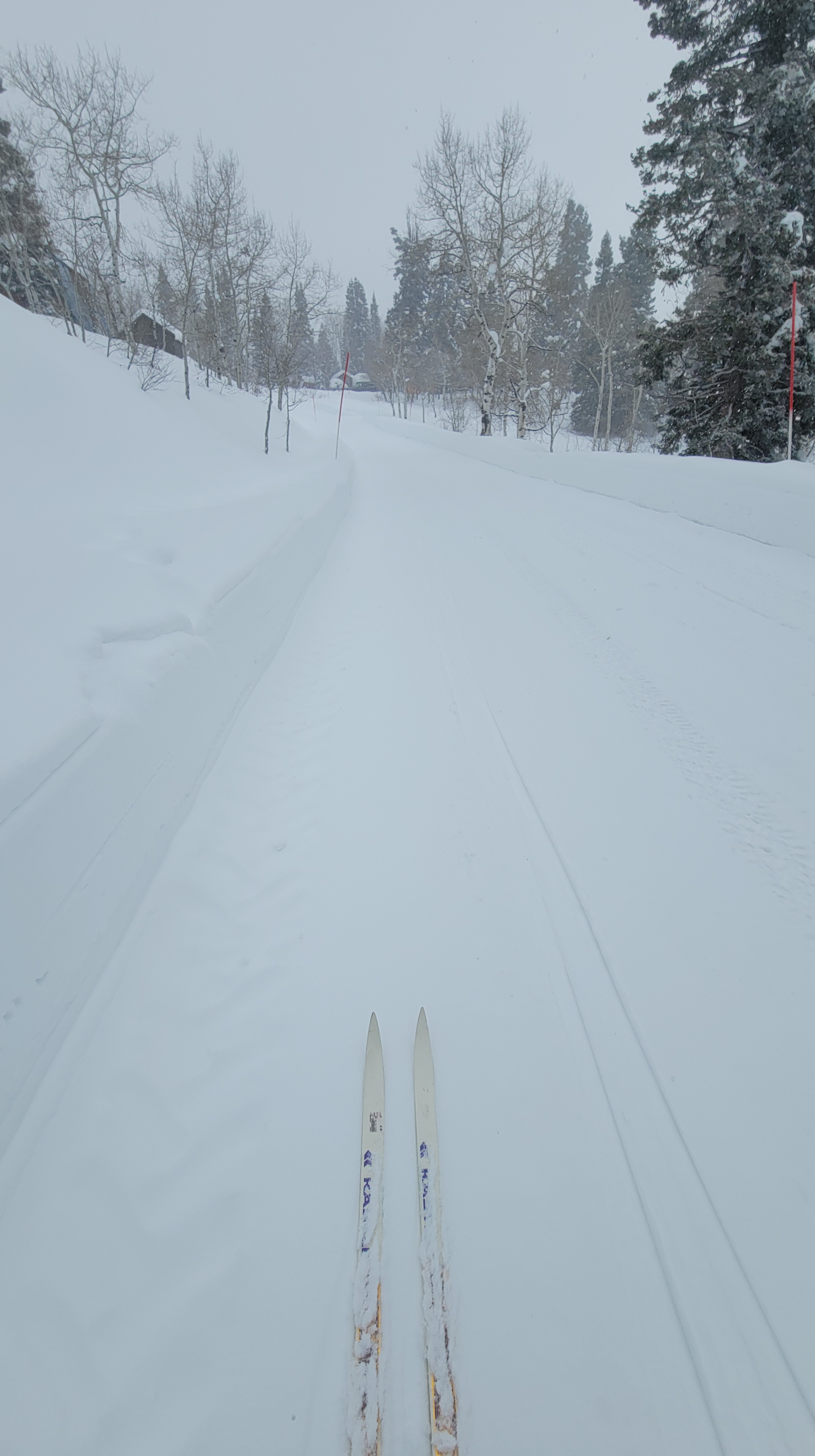
Biathlon and cross country skiing have always been favorites of mine during the winter Olympics, and my wife’s upbringing in Duluth, Minnesota and exposure to the cross country enthusiasts from the Northland helped pique my curiosity for this style. What’s more, running half-marathons and triathlons in the past have been enjoyable; why not bring the endurance itch to the winter for a scratch? I’ve gotten started on an old pair of Kastle waxless skis thrifted by a friend (thanks Luke!) The freedom to just hop on and rip a few laps before work or during lunch is refreshing and rejuvenating, and I think that repetition has helped mellow out the learning curve early. One of my reflections on cross country skiing so far is that I find it to be the grace to downhill skiing’s power. It’s mastery doesn’t involve cutting hard and quick or powering through a turn. Rather, its lessons so far are that less is more and that rhythm trumps reaction. In other words, slow is smooth; smooth is fast (another post for another day.) Still, these lessons can be hard-learned. One particular left banking downhill in my neighborhood has taken me prisoner several times. And if you really want to experience lifelong learning, tumbling like a fawn down a hill on cross country skis at 31 years old will make learning very real for you.
A career in the mining industry will entirely reframe how one thinks about and approaches safety. Not just at work, but also in everyday life. Could also be that I’m getting older and have kids to take care of, but we’ll pin it on the workplace safety culture for now. All skiing comes with inherent risks, but backcountry skiing doubly so. Not only do you have to control your descent, but you now have to be aware of and identify environmental hazards that are controlled for within the boundaries of a ski area. On top of this, tackling these challenges with equipment designed to do two things decently well instead of one thing very well provides a new learning challenge. Because of this, I’ve started by taking a metered and slow approach. With an understanding that slopes less than 30 degrees will not trigger avalanche activity, I’ve scouted some great safe spots in my neighborhood to develop the prerequisite fitness and skills for growth in backcountry skiing. I plan to take these skills to a formal course, where I can build on them, take this knowledge into new areas with new risks, and test myself and my learnings. And just as with any workplace safety program. having a plan, communicating your plan, and going out with a buddy is key to mitigating the inherent risks.
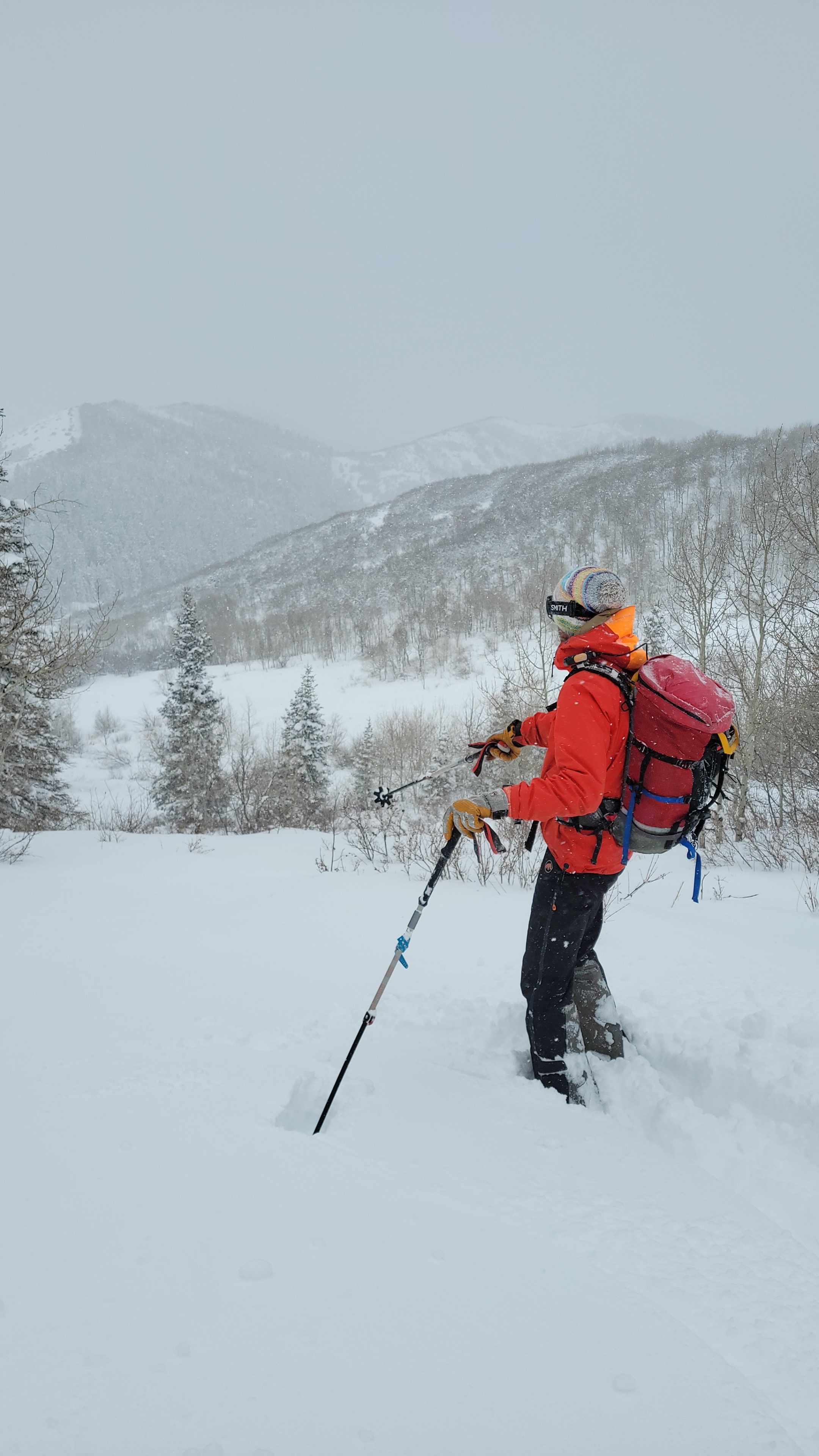
Snowboarding started as a hobby and taught lessons of patience. Alpine skiing introduced a love of winter and a fearlessness for learning throughout life. Cross-country skiing opened up new perspectives on endurance and grace, while backcountry skiing introduced an entirely different challenge: avalanche safety. Through the learning process, skiing has become more than just the hobby it was in childhood. It’s now the way I exercise, experience nature, and as I’ll post about in the future, a way to gain a unique perspective on the mining industry.
LESSONS FROM LEARNING (THROUGHOUT LIFE)
Getting older brings some small pieces of wisdom, and finding ways to continue learning that work for you is one of the most fulfilling. In my case, learning new ways to ski may not bring total clarity and enlightenment to my work or home life, but it does provide an arena for me to learn a few lessons about learning later in life.
Failure is unavoidable. Make it manageable.
Whether it’s navigating avalanche territory or mastering the rhythm of cross-country skiing, failure is part of the process. But by aligning the learning process with something I enjoy, I’ve been able to shorten the failure period and keep moving forward.
Preparation and safety go hand in hand.
Backcountry skiing continues to remind me that growth is impossible without preparation. Learning, growing, and excelling all require risk, but managing that risk is critical for progress.
Learning is lifelong.
Picking up a new skill like cross-country skiing in my 30s wasn’t just about fitness—it was a reminder that I’m never done learning.
Find your favorite way to learn. Use it to learn how to learn.
 Finding Outskirts
Leave a comment